

Practice on campus, then prove it at a Houston-area clinical site.
If you want a hands-on healthcare career working with patients and specimens, this program covers three related areas: laboratory procedures, electrocardiogram testing, and professional blood collection. Classes are small, labs are hands-on, and Houston Career Institute is accredited by ACCSC. Graduates may be eligible to sit for two NCCT exams, the NCET and the NCPT, and are also CPR certified.
At Least 50 Successful Blood Draws
Before you graduate, you prove your collection skills on real patients: at least 50 successful blood draws and 10 successful skin punctures at an approved Houston-area site.
Small Classes, Hands-On Labs
Train at HCI's Southwest Houston campus at 9700 Bissonnet Street, where small classes and hands-on labs give you personal attention as you practice phlebotomy, EKG, and laboratory procedures.
Built in Focused 80-Hour Modules
After an introductory healthcare module, you move through seven 80-hour modules covering laboratory safety, body systems, EKG fundamentals, specimen handling, and phlebotomy before your externship begins.
Pell Grants, Loans and Payment Options
HCI is approved for federal financial aid for qualifying students, including Federal Pell Grants and federal student loans, and payment options are also available.
Eight Modules Plus a Clinical Externship in Houston
From venipuncture and EKG operation to specimen handling and body systems, each 80-hour module builds toward your externship.
- Introduction to the healthcare profession, laboratory safety, and the integumentary system
- Blood, urinary, reproductive, endocrine, and digestive systems
- Respiratory and cardiac systems, with EKG fundamentals, operation, and interpretation
- Phlebotomy, including venipuncture and capillary collection techniques
- Specimen handling and processing, therapeutic drug monitoring, and medical laboratory procedures
- Nervous system, behavioral health, musculoskeletal anatomy, and medical terminology
- Infection control, patient care, and communication
- A 160-hour clinical externship at an approved Houston-area site
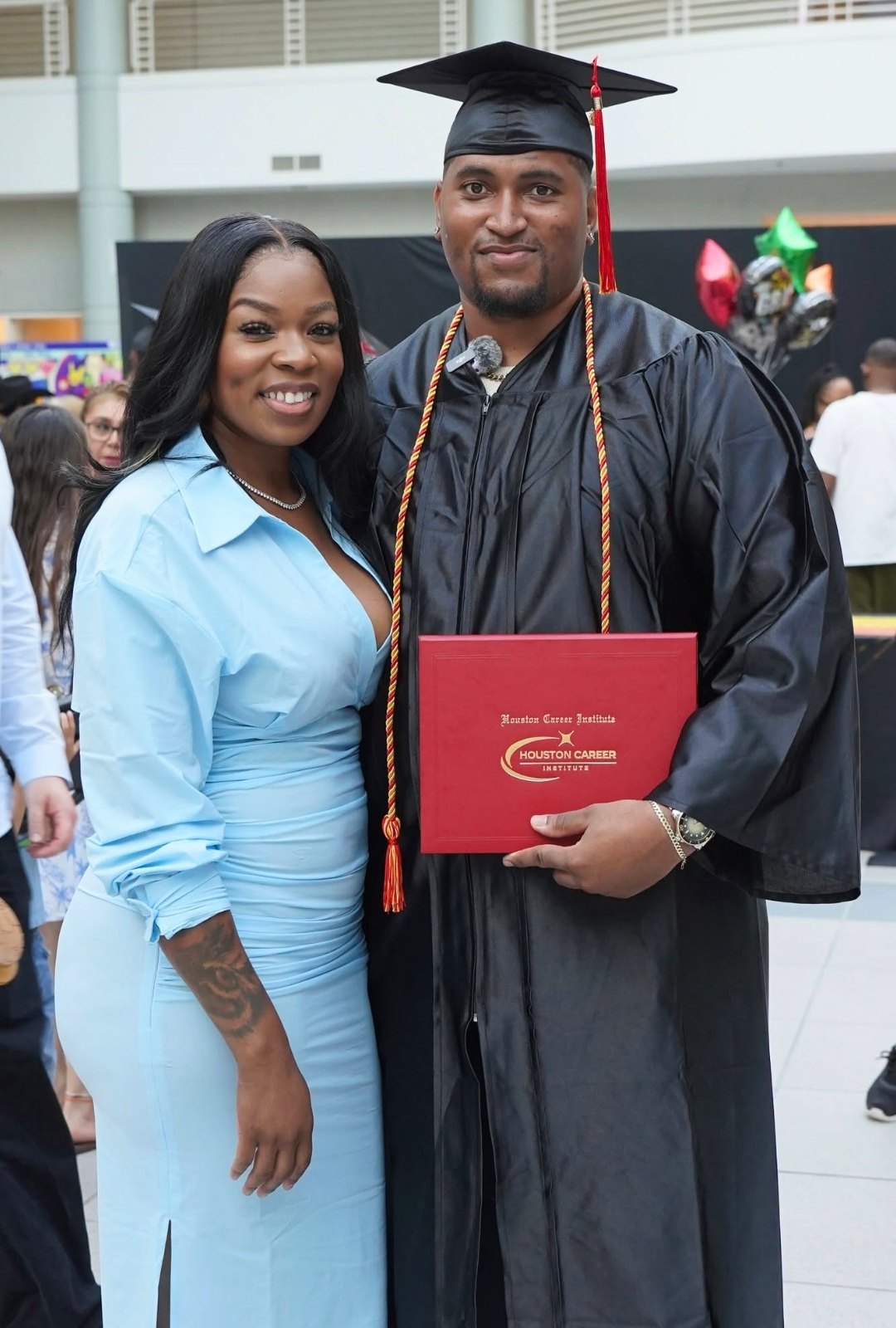
Your Path From First Question to Graduation
Talk With Admissions
Share a few details and an HCI admissions advisor will walk you through requirements, start dates, tuition, and financial aid for those who qualify. Applicants need a high school diploma or GED.
Train on Campus
Work through eight 80-hour modules in small classes on Bissonnet Street, practicing phlebotomy, EKG, and laboratory procedures in hands-on labs.
Complete Your Externship
Apply your skills over 160 hours at an approved Houston-area site, completing at least 50 successful blood draws and 10 successful skin punctures.
Prepare for Certification
Leave CPR certified and ready to sit for the NCET and NCPT exams if eligible. Career services can then help you look for entry-level phlebotomy, EKG or lab roles.
Find Out When the Next Lab, EKG and Phlebotomy Class Starts
Request details and an HCI admissions advisor will follow up about tuition, financial aid for those who qualify, admission requirements, and how the modules and externship fit together.
No obligation. Your information stays private.